Clean Coal Technology
Clean Coal Technology is an approach to developing and improving the coal combustion process for maximum benefit, aiming to minimize environmental impact from particulates, SO₂, and NOₓ — covering pre-combustion, combustion, post-combustion, and coal conversion, divided into 4 main stages as follows:
Pre-combustion
Cleans the coal before use by removing impurities such as rock fragments, soil, and sulfur minerals, resulting in cleaner coal and reduced pollution in later stages.
• Methods used include:
- ► Physical methods (e.g. screening and sizing)
- ► Chemical methods
- ► Biological methods
2. Combustion
Improves furnace and boiler efficiency for more complete combustion, reducing pollutants such as particulates, SO₂, and NOₓ.
• May include low-NOx burner technology or temperature-controlled combustion.
3. Post-combustion
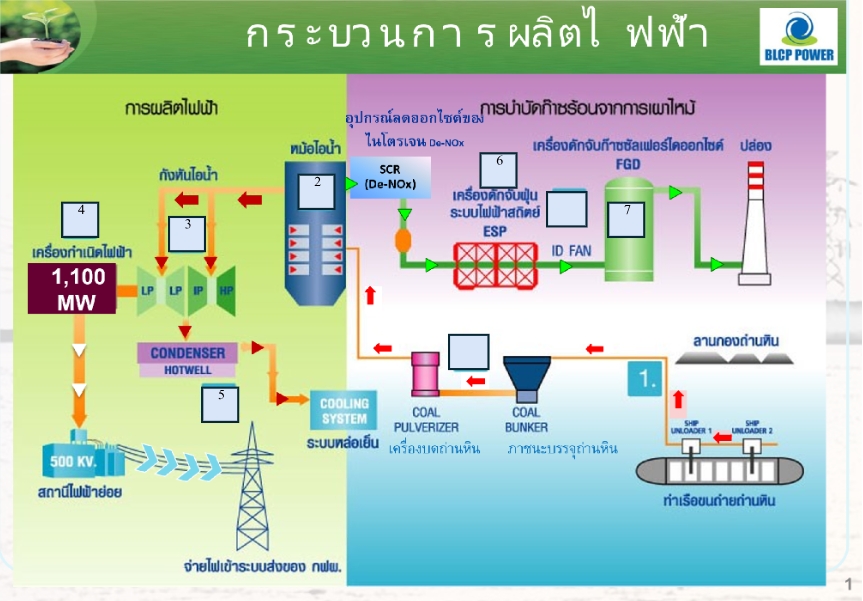
Controls and removes pollutants generated by combustion before release into the environment, such as
• ESP (Electrostatic Precipitator) to capture particulates
• FGD (Flue Gas Desulfurization) system to capture SO₂
• Selective Catalytic Reduction (SCR) to reduce NOₓ
4. Coal Conversion
Converts coal into other fuel forms such as gas (Coal Gasification) or liquid (Coal Liquefaction) to reduce emissions and use energy more efficiently.
Summary:
Clean Coal Technology is a key approach to balancing energy security with environmental care, focusing on reducing pollution at every stage of coal use, from upstream to downstream.